
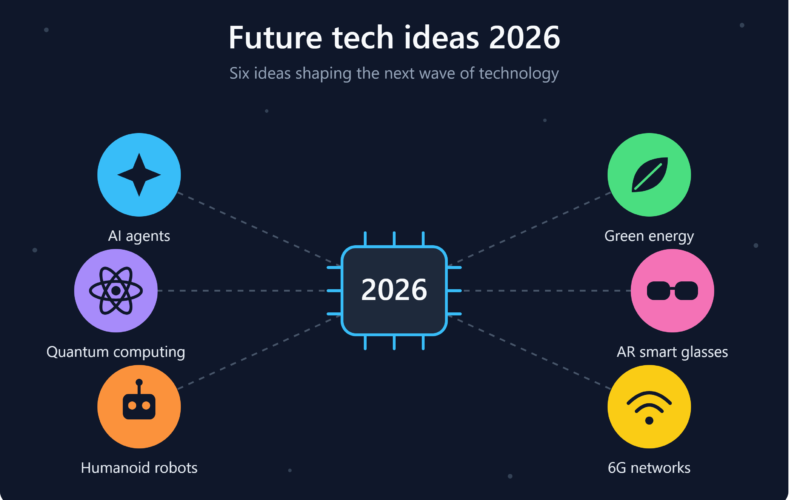
Future inventions ideas worth tracking in the next decade include AI-powered automation, lab-grown materials, personalized medicine, and next-generation energy storage. Small business owners should watch AI and automation trends closely, since those innovations are already affordable and accessible today.
Future inventions ideas rarely emerge from a single breakthrough. They build on existing technology — a sensor gets cheaper, a material gets lighter, an algorithm gets faster — until the combination unlocks something new. That’s the pattern behind most of the innovations reshaping business and daily life right now.
If you’re a beginner trying to understand where technology is headed, or a small business owner wondering which trends deserve your attention, this guide breaks down fifteen future inventions ideas worth knowing. Each one includes a plain-language explanation, a real-world example, and a note on why it matters for people building something today.
You don’t need an engineering degree to follow this. You need a clear map of what’s coming and what to do with it.
What are the most promising future inventions ideas right now?
The most promising future inventions ideas combine artificial intelligence, sustainable materials, and biotechnology to solve problems that older technology couldn’t touch. These three categories account for the majority of venture capital investment in emerging tech, according to PitchBook’s 2024 venture monitor [verify]. Below, each idea is grouped by category so you can scan for what’s relevant to your work.
AI and automation inventions
1. Agentic AI systems
Agentic AI refers to software that can complete multi-step tasks autonomously, not just answer a single prompt. Instead of asking a chatbot one question at a time, you give an agentic system a goal — “book this trip” or “reconcile this spreadsheet” — and it executes the steps itself. OpenAI and Google have both released early agent products in 2024, signaling this is moving from research to product.
For a small business, this means tasks like customer email triage, inventory reordering, and basic bookkeeping could run with minimal supervision within the next few years.
2. AI-powered hiring and scheduling tools
These platforms screen applicants, match shift availability, and flag compliance issues automatically. Tools like this already exist in early form — the next generation will integrate directly with payroll and labor law databases, reducing manual HR work for small teams.
3. Voice-first interfaces for business software
Rather than clicking through menus, users will increasingly speak commands to manage inventory, log expenses, or pull reports. This shift mirrors what happened with smartphones: fewer taps, more natural interaction.
Sustainable materials and energy inventions
4. Solid-state batteries
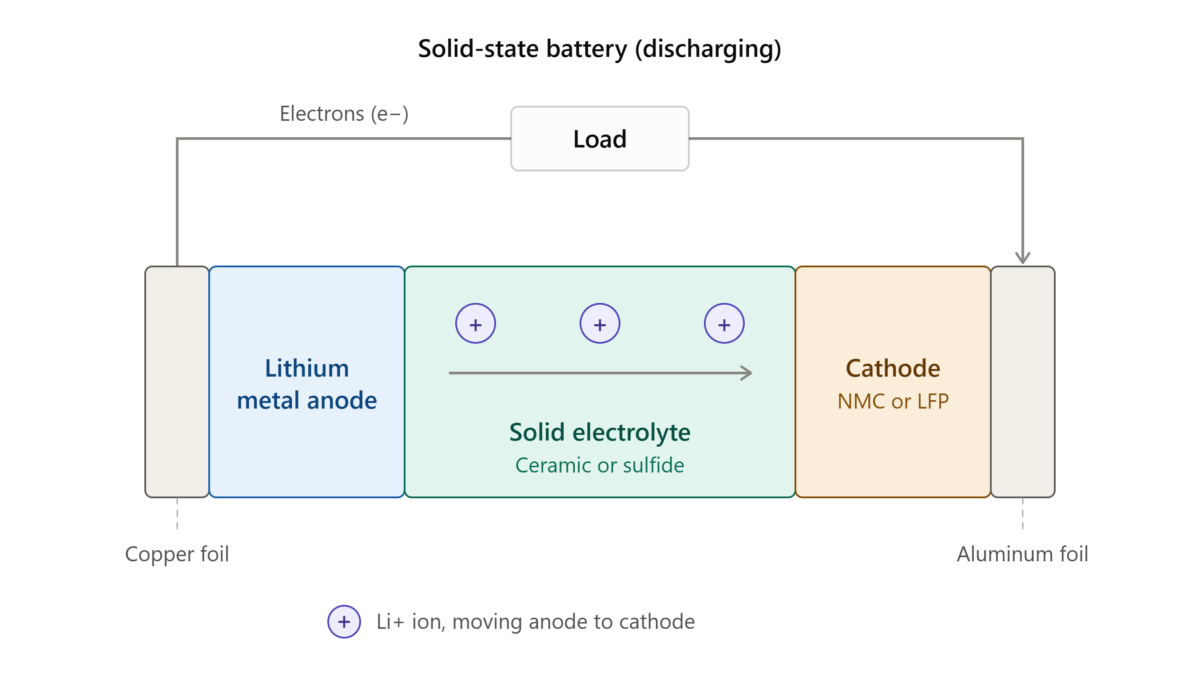
A solid-state battery replaces the liquid electrolyte in a standard lithium-ion battery with a solid material, which makes it safer and capable of storing more energy in the same amount of space. Toyota has announced plans to bring solid-state battery vehicles to market, citing faster charging times and longer range as the primary benefits [verify exact timeline].
Choose to watch this space if your business depends on electric vehicles, delivery fleets, or portable power equipment — the cost curve on these batteries is expected to drop sharply once manufacturing scales.
5. Lab-grown and bio-based materials
Companies are now growing leather alternatives from mushroom mycelium and producing packaging from seaweed instead of plastic. Bolt Threads and Notpla are two named examples already selling bio-based materials to commercial buyers.
For small business owners in retail or food service, these materials offer a sustainability story that resonates with customers without requiring a full supply chain overhaul.
6. Direct air capture technology
Direct air capture (DAC) pulls carbon dioxide directly from the atmosphere using large filtration systems. Climeworks operates the largest DAC facility in Iceland, capable of removing thousands of tons of CO2 annually. This technology remains expensive today, but costs are falling as more facilities come online.
7. Next-generation solar materials
Perovskite solar cells are a newer alternative to traditional silicon panels, offering higher efficiency potential at a lower manufacturing cost. Oxford PV has already begun commercial production of perovskite-silicon tandem panels, which suggests this technology is closer to mainstream adoption than many assume.
Health and biotechnology inventions
8. Personalized medicine based on genetic data
Personalized medicine tailors treatment plans to an individual’s genetic profile rather than applying a one-size-fits-all protocol. This approach is already standard in some cancer treatments, where genetic testing determines which therapy will be most effective for a specific tumor type.
9. Wearable health diagnostics
Devices like continuous glucose monitors and smartwatches with ECG capability are expanding beyond fitness tracking into actual diagnostic territory. The next wave includes wearables that monitor blood pressure and hydration without a needle or cuff.
10. Lab-grown organs and tissue
Researchers have successfully grown miniature organ models (organoids) for drug testing, and early-stage bioprinting experiments are working toward functional tissue for transplant. This remains years from mainstream clinical use, but the research trajectory is well documented in peer-reviewed journals.
Everyday life and consumer inventions
11. Smart home energy management
Systems that automatically shift energy usage to off-peak hours — running the dishwasher at 2 a.m. when electricity is cheapest — are becoming standard in newer smart home platforms. This reduces utility costs without requiring the homeowner to think about it.
12. Autonomous delivery robots and drones
Companies like Starship Technologies already operate sidewalk delivery robots on college campuses and in select cities. For small business owners in retail or food delivery, autonomous delivery could reduce last-mile shipping costs significantly once regulatory approval expands.
13. Advanced water purification tech
New filtration membranes can remove contaminants at a molecular level, making water recycling more viable for both municipal systems and individual households. This matters most in regions facing water scarcity, where the cost of purification technology directly affects public health outcomes.
14. Augmented reality for retail and training
Augmented reality (AR) overlays digital information onto the physical world through a phone screen or headset. Retailers use AR to let customers preview furniture in their homes before buying; manufacturers use it to train employees on equipment without stopping production lines.
15. Biodegradable electronics
Engineers are developing circuit boards and sensors designed to decompose after use, reducing electronic waste. This idea is still largely experimental, but it directly addresses a growing problem: the world generated 62 million metric tons of e-waste in 2022, according to the Global E-waste Monitor [verify].
Why should small business owners pay attention to future inventions ideas?
Small business owners should track future inventions ideas because early adoption of accessible technology creates a competitive advantage before it becomes standard practice. Waiting until a technology is fully mainstream usually means competing against businesses that already built processes around it.
Choose AI automation tools first if your biggest constraint is staff time. Choose sustainable materials first if your customers actively ask about environmental impact. The right starting point depends on which constraint is costing you the most right now — time, money, or reputation.
A simple framework for deciding what to adopt:
- Identify your biggest operational bottleneck. Name the specific task that consumes the most hours or causes the most errors each week.
- Match the bottleneck to a category above. A scheduling bottleneck points to AI tools; a packaging cost issue points to bio-based materials.
- Pilot on a small scale. Test one tool or material with a limited budget before committing to a full rollout.
- Measure the result against a baseline. Track time saved, cost reduced, or customer feedback before and after adoption.
- Scale what works, drop what doesn’t. Not every future invention idea will fit every business — the goal is finding the two or three that solve your actual problems.
Key takeaways
Future inventions ideas span AI, sustainable materials, biotechnology, and consumer technology, but not every trend deserves immediate attention. Focus on the innovations that solve a problem you already have, pilot them on a small scale, and measure results before scaling further.
Start by auditing your current operations for the single biggest time or cost drain, then revisit the categories above to find a matching solution. The businesses that benefit most from emerging technology aren’t the ones that adopt everything first — they’re the ones that adopt the right thing at the right time.
FAQ
What are the top future inventions ideas for 2025 and beyond?
The top future inventions ideas include agentic AI systems, solid-state batteries, personalized medicine, autonomous delivery robots, and bio-based materials. These innovations are already in commercial or late-stage development, making them more immediately relevant than purely experimental technology.
Which future inventions are most relevant for small businesses?
AI-powered automation tools and sustainable packaging materials are the most relevant future inventions for small businesses today. Both categories offer accessible entry points — AI tools through existing software subscriptions, and sustainable materials through supplier partnerships — without requiring large capital investment.
How much does it cost to adopt new technology like AI automation?
Costs vary widely depending on the tool and scale, ranging from free tiers of AI software to custom enterprise integrations costing thousands per month. Small business owners should start with a free or low-cost pilot before committing to a larger contract.
What are the risks of adopting emerging technology too early?
Early adoption risks include higher costs, limited technical support, and the possibility that a competing standard replaces the technology before it matures. Piloting on a small scale, as outlined in the framework above, reduces exposure to these risks.
Are there alternatives to adopting cutting-edge inventions right away?
Yes — businesses can wait for technology to mature and costs to drop, a strategy known as being a “fast follower” rather than an early adopter. This approach sacrifices some competitive advantage but reduces financial and operational risk.

1 comment