Electron charge is the amount of negative electric charge carried by a single electron, measured at exactly −1.602176634 × 10⁻¹⁹ coulombs. This value, called the elementary charge, is a fixed constant of nature. It determines how electrons interact with protons, how current flows through a circuit, and how atoms bond to form molecules.
Every battery you charge and every spark you see relies on a number most people never learn: the charge of a single electron. That number explains why wires conduct electricity, why atoms stick together, and why your phone screen lights up when you tap it. Understanding electron charge gives you a foundation for grasping electricity, chemistry, and the physical world around you — without needing an advanced physics degree.
This guide breaks down what electron charge is, how scientists measured it, and why it matters in both electrical systems and chemical bonding.
What Is Electron Charge?
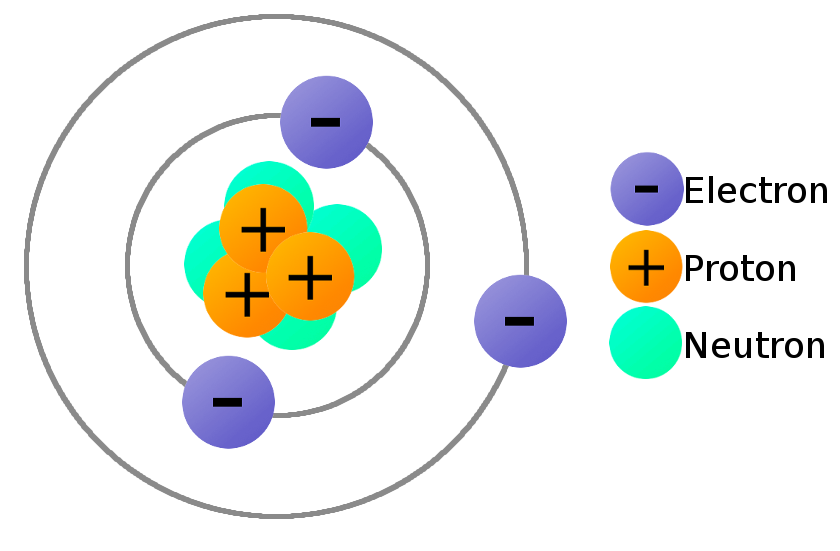
Electron charge is the fixed, negative electric charge carried by every electron in the universe. Electrons are subatomic particles that orbit the nucleus of an atom, and each one carries an identical, unchanging amount of charge.
This charge is negative by convention — protons, the positively charged particles in an atom’s nucleus, carry the exact same magnitude of charge but with the opposite sign. Because opposite charges attract, this balance holds atoms together.
The Value of Electron Charge
Elementary Charge Defined
The elementary charge is the smallest unit of electric charge that exists freely in nature, and it equals the magnitude of a single electron’s charge: 1.602176634 × 10⁻¹⁹ coulombs. Since the 2019 redefinition of the International System of Units (SI), this value is treated as an exact, fixed constant rather than a measured approximation.
Every other electric charge in the universe is a whole-number multiple of this elementary charge. A proton carries +1 elementary charge, while an ion with two extra electrons carries −2 elementary charges.
How Scientists Measured It
Physicist Robert Millikan measured the elementary charge through the oil-drop experiment in 1909. He suspended charged oil droplets in an electric field and adjusted the field strength until the electric force balanced gravity, holding each droplet still.
By analyzing the forces needed to suspend droplets of varying charge, Millikan calculated a charge value close to today’s accepted constant. His work earned him the Nobel Prize in Physics in 1923 and remains one of the most cited experiments in physics education.
Why Electron Charge Matters
Role in Electricity and Circuits
Electron charge drives every electric current. Current is the flow of electrons through a conductor, and the rate of that flow — measured in amperes — depends directly on how much charge moves past a point per second.
Engineers use the elementary charge constant to calculate current, resistance, and power in circuit design. Choose a conductor with low resistance, such as copper, if you need electrons to flow with minimal energy loss.
Role in Chemistry and Atomic Bonding
Electron charge governs how atoms bond to form molecules. Atoms share or transfer electrons to achieve a stable charge balance, which creates the covalent and ionic bonds that hold compounds together.
Sodium chloride (table salt) forms when a sodium atom transfers one electron to a chlorine atom, creating oppositely charged ions that attract each other. This same principle — electron transfer driven by charge balance — explains reactions throughout organic and inorganic chemistry.
Key Properties of Electric Charge
Electric charge follows a consistent set of physical rules:
- Quantized: Charge exists only in whole-number multiples of the elementary charge.
- Conserved: Total charge in a closed system never increases or decreases; it only moves or redistributes.
- Oppositely attractive: Positive and negative charges attract each other, while like charges repel.
- Invariant: An electron’s charge stays the same regardless of its speed or location.
Frequently Asked Questions
What is the charge of an electron in coulombs?
An electron carries a charge of −1.602176634 × 10⁻¹⁹ coulombs, a fixed constant known as the elementary charge.
Why is electron charge negative?
Electron charge is negative by scientific convention, established before the particle’s true charge was known. Protons were later found to carry the opposite, positive charge of equal magnitude.
Is electron charge the same for every electron?
Yes. Every electron in the universe carries the exact same charge, with no variation across atoms, elements, or locations.
How is electron charge different from electron mass?
Charge and mass are separate properties. Charge determines how an electron interacts electrically with other particles, while mass (about 9.109 × 10⁻³¹ kilograms) determines its resistance to acceleration.
What experiment proved the value of electron charge?
Robert Millikan’s oil-drop experiment, conducted in 1909, provided the first precise measurement of the elementary charge.
Key Takeaways
Electron charge is a fixed constant — 1.602176634 × 10⁻¹⁹ coulombs — that underlies electricity, chemistry, and atomic structure. Millikan’s oil-drop experiment first measured this value, and modern science now treats it as an exact SI constant.
Explore how electron charge relates to current and voltage by reviewing a basic circuit diagram, or study the periodic table to see how electron transfer shapes chemical bonding across different elements.