
Biomedical Innovations: What’s Changing Healthcare Today
Biomedical innovations — new technologies and techniques that improve diagnosis, treatment, and patient outcomes — are reshaping modern healthcare. From gene editing to AI-assisted diagnostics, these advances are making medicine more precise, personalized, and accessible. You’ll find the key breakthroughs explained below, along with what they mean for patients and providers.
Biomedical innovations are advances in science and technology that improve how diseases are diagnosed, treated, and prevented. You’re likely already encountering their effects, whether through a wearable health tracker, a faster lab test, or a more targeted treatment plan from your doctor.
This field moves fast. Researchers, clinicians, and engineers are combining biology, data science, and engineering to solve problems that once seemed intractable. Below, you’ll find a breakdown of the innovations driving this shift and practical context for understanding where the field is headed.
What are the biggest biomedical innovations right now?
Several categories of innovation are converging to reshape patient care.
Gene editing and genomic medicine
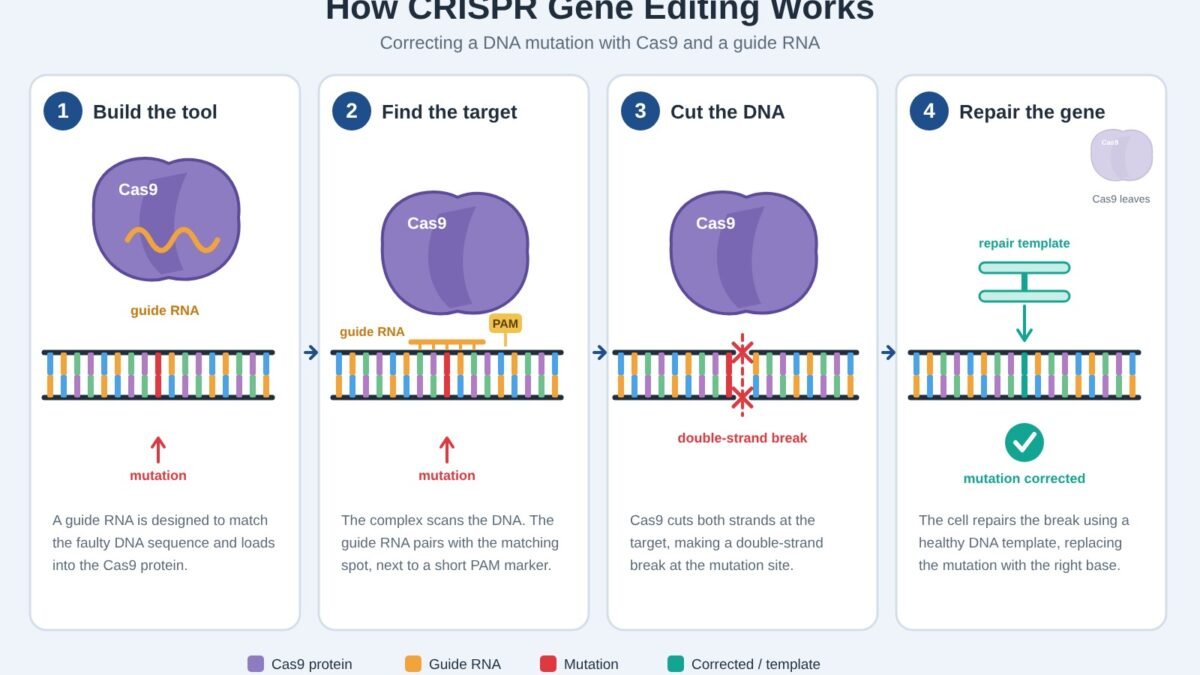
Gene editing — the direct modification of an organism’s DNA using tools like CRISPR-Cas9 — allows scientists to correct genetic mutations at their source. This approach is being explored for conditions including sickle cell disease and certain inherited eye disorders [verify]. Genomic medicine applies this same precision to diagnosis, using a patient’s genetic profile to predict disease risk and tailor treatment.
AI-assisted diagnostics
Artificial intelligence models trained on medical imaging can now flag abnormalities — such as tumors or diabetic retinopathy — often faster than manual review alone [verify]. These tools don’t replace clinicians. They assist them by surfacing patterns that are easy to miss under time pressure.
Wearable and remote monitoring devices
Wearable biosensors track metrics like heart rhythm, blood oxygen, and glucose levels continuously, rather than at a single appointment. This shift from episodic to continuous monitoring gives clinicians earlier warning signs of complications.
Regenerative medicine and tissue engineering
Regenerative medicine focuses on repairing or replacing damaged tissue using stem cells, biomaterials, or engineered organ structures. Lab-grown tissue models are also accelerating drug testing by reducing reliance on animal trials [verify].
How do biomedical innovations affect patients?
Biomedical innovations affect patients by shortening diagnosis times, personalizing treatment, and reducing invasive procedures. Choose genomic testing if your condition has a known hereditary component. Choose AI-assisted screening if early detection speeds up your path to treatment. The right innovation depends on the specific condition and the evidence supporting it for that use case.
| Innovation | Primary Benefit | Best suited for |
|---|---|---|
| Gene editing | Corrects root genetic cause | Inherited single-gene conditions |
| AI diagnostics | Faster, consistent screening | Imaging-heavy specialties |
| Wearables | Continuous monitoring | Chronic condition management |
| Regenerative medicine | Tissue repair, drug testing | Injury recovery, R&D |
What challenges do biomedical innovations face?
Biomedical innovations face three recurring challenges: regulatory approval timelines, data privacy concerns, and equitable access. New treatments must clear rigorous clinical trial phases before reaching patients, which can take years. Data privacy becomes a concern as wearables and genomic databases collect sensitive personal information. Access remains uneven — many advanced treatments launch at a high cost before broader availability follows.
Where is biomedical innovation headed next?
Biomedical innovation is headed toward deeper integration between data and treatment — using a patient’s continuous health data to adjust care in real time, rather than waiting for the next appointment. Track developments from your national health regulator and major research institutions to stay current as this field evolves.
FAQ
What is a biomedical innovation?
A biomedical innovation is any new technology, technique, or process that improves how diseases are diagnosed, treated, or prevented, spanning fields like genomics, diagnostics, and medical devices.
Is gene editing safe?
Gene editing safety depends on the specific technique and application. Current clinical use is limited to carefully regulated trials, with long-term safety data still accumulating [verify].
How does AI improve medical diagnosis?
AI improves medical diagnosis by analyzing large volumes of imaging or patient data to detect patterns that support — not replace — a clinician’s judgment.
Who benefits most from wearable health devices?
Patients managing chronic conditions, such as diabetes or heart arrhythmias, benefit most from wearable devices because continuous data helps catch complications earlier.
What’s the difference between regenerative medicine and traditional treatment?
Regenerative medicine aims to repair or replace damaged tissue at its source, while traditional treatment typically manages symptoms or slows disease progression.
Key takeaways
Biomedical innovation is changing how diseases are caught, understood, and treated. Gene editing targets genetic root causes. AI diagnostics speed up detection. Wearables extend monitoring beyond the clinic. Regenerative medicine repairs rather than manages. Talk to your healthcare provider about which of these innovations apply to your specific condition, and ask what clinical evidence supports their use.